The Sensory Network
Embedding intelligence into the physical foundations of our cities.
The Internet of Things (IoT) serves as the nervous system of a smart city. By deploying millions of connected sensors across municipal infrastructure, cities can transition from reactive maintenance to proactive management.
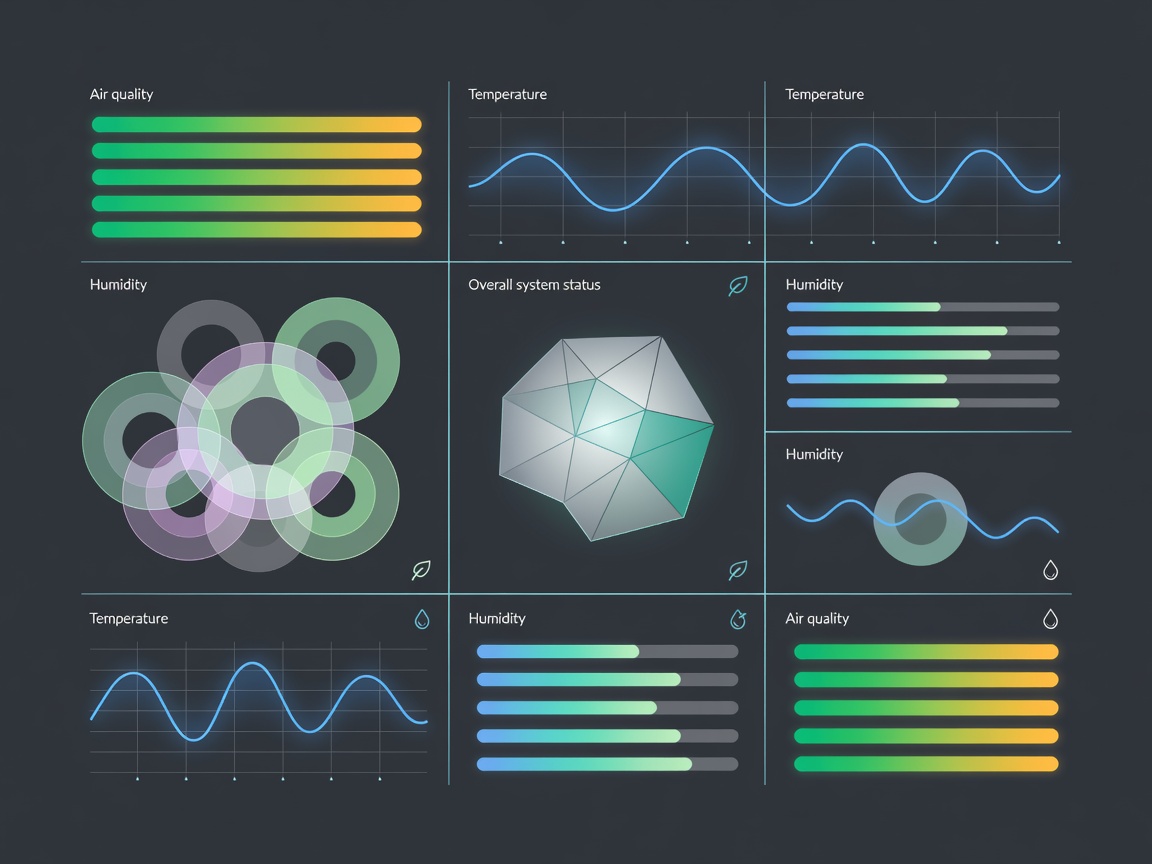
Environmental & Air Quality Monitoring
Cities like Barcelona and Singapore have pioneered the use of distributed environmental sensors. These devices measure particulate matter (PM2.5), nitrogen dioxide, and acoustic levels in real time. Planners use this granular data to implement dynamic low-emission zones, adjust traffic flows away from heavily polluted corridors, and validate the impact of new green spaces.
Structural Integrity Nodes
Bridges, tunnels, and historic buildings are increasingly being retrofitted with piezoelectric and strain gauge sensors. These nodes continuously monitor vibrations, stress, and load distribution. When micro-fractures or anomalous settling occur, automated alerts are dispatched to engineering teams long before human inspection would detect a hazard.
Waste & Resource Management
Smart bins equipped with ultrasonic fill-level sensors transmit their status via LPWAN (Low Power Wide Area Networks). This allows sanitation fleets to optimize collection routes daily, reducing fuel consumption by up to 30% and eliminating overflowing receptacles in high-density zones.